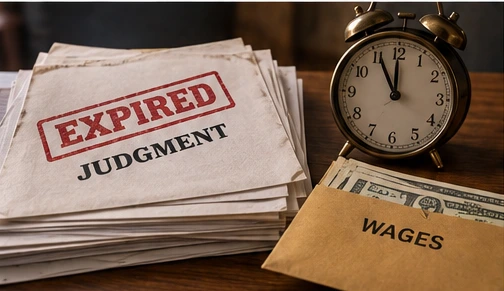
Transcription did not restart this judgment
A federal court order in Lucianna v. SB&C, reported by the debt-collection trade press October 5, 2026, grants consumers partial summary judgment on liability over collection of an expired Washington judgment. The court denied the collectors' competing motion. It is a ruling in this case, not nationwide cancellation of old debts.
The underlying judgment was $38,543.90 entered October 19, 2012 in district court. It was transcribed to superior court in 2018 and later assigned. A 2024 wage-garnishment writ asserted more than $85,000 remained. The order reiterates that the judgment expired October 19, 2022 rather than gaining a new ten-year life on transcription.
Liability and compensation are different stages
The court rejected the collectors' bona-fide-error defense and found federal and state collection-law violations. It treated ordinary debt litigation practice as insufficient evidence of procedures designed to prevent this error. Consumers should distinguish an enforceability issue from whether a debt once existed.
The motions concerned liability, while damages remain a separate question. Judgment duration, renewal and collection rules vary by jurisdiction and record. Someone receiving a writ should preserve the original judgment, extension history and current papers and obtain case-specific advice rather than ignore it solely because the debt sounds old.